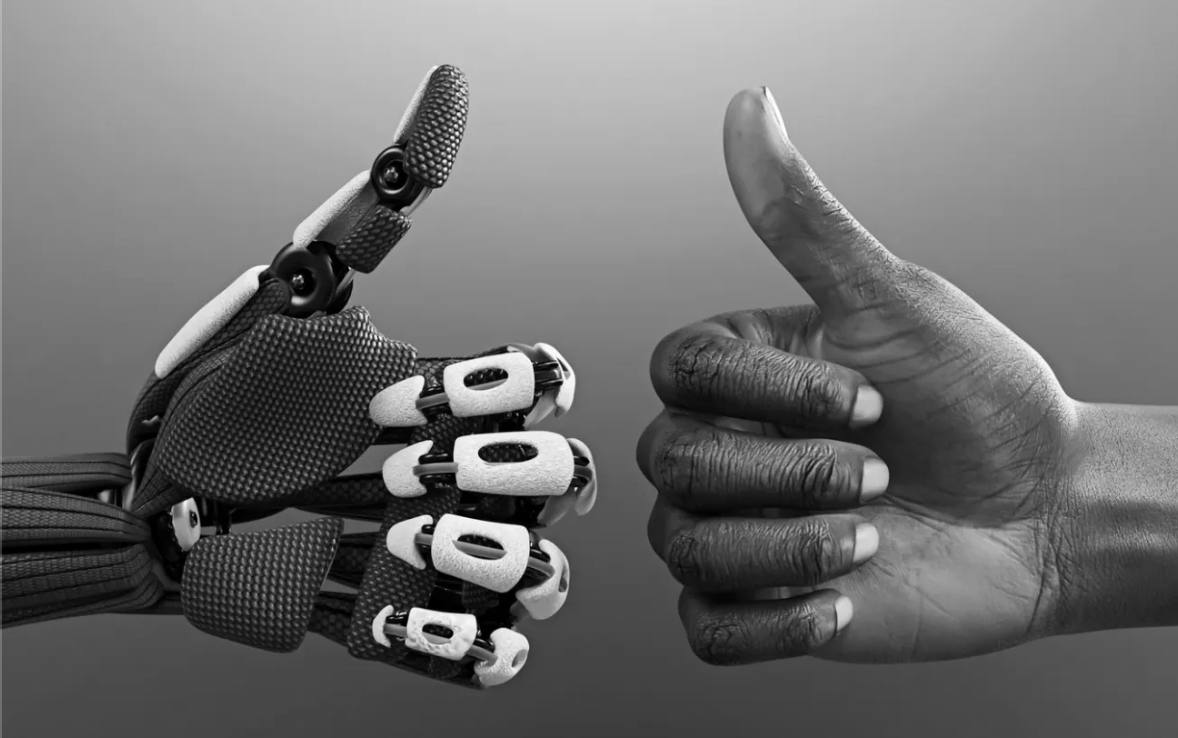
The AI Race Is Moving Into the Physical World — And Meta Knows It

Meta’s acquisition of robotics startup Assured Robot Intelligence looks less like a side project and more like a declaration that the next frontier of AI is physical. The company is clearly betting that large language models alone are not enough, and that the real long-term value comes from systems that can understand and operate inside the real world.

What stands out here is that Meta is not buying a robot manufacturer. It is buying intelligence and dexterity research. That suggests Zuckerberg sees humanoid robotics the same way the industry now sees foundation models: the winning layer may ultimately be the software stack that powers many different hardware platforms. Combined with Meta’s growing investments in wearables, AI assistants, and spatial computing, this move makes the company look increasingly focused on building a full consumer “physical AI” ecosystem rather than just another chatbot platform.


READ ARTICLE

Robotics Enters Its AI Era, But Real-World Readiness Will Decide the Winners

The Centre for Emerging Technology and Security report makes a clear case that AI is about to fundamentally reshape robotics, pushing machines beyond rigid, rules-based systems into adaptive, learning-driven agents that can navigate, decide, and interact in real time. The trajectory points toward robots that generalize across environments and learn from experience, bringing them closer to human-like flexibility by 2035.

What stands out is the gap between innovation and real-world adoption, which is framed as the actual constraint rather than raw capability. The report argues that progress now depends less on model breakthroughs and more on infrastructure such as shared datasets, testing environments, and trust frameworks, especially as these systems carry national security implications.

READ ARTICLE

AI Is Scaling Faster Than We Can Control It

The Stanford Institute for Human-Centered AI 2026 AI Index makes one thing clear: AI isn’t slowing down, it’s outrunning the systems meant to understand and govern it. Capabilities are accelerating across the board, with models now approaching or exceeding human-level performance in complex domains, while adoption has reached historic speed—over half the global population is already using generative AI in just a few years.

But the more important signal is the imbalance. Measurement, safety, and governance are lagging behind the technology itself, with rising incidents and inconsistent standards across the industry. The result is a field that’s no longer defined by possibility, but by tension—between rapid capability gains and a growing inability to manage their consequences. This isn’t a hype cycle; it’s a coordination problem at global scale.

READ ARTICLE