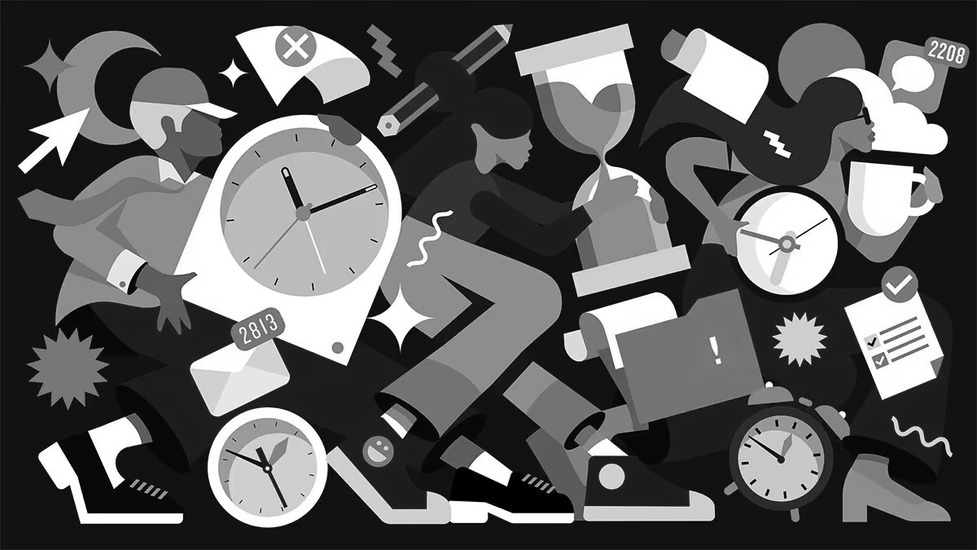
AI Isn’t Cutting Workload — It’s Making It Worse

Illustration by Eynon Jones

Recent research highlighted in Harvard Business Review finds that generative AI doesn’t actually reduce the amount of work people do; it just intensifies it. In a longitudinal study of roughly 200 employees at a U.S. tech company, tools designed to speed up tasks ended up pushing people to work faster, take on broader scopes of responsibility, and stretch their days into evenings and breaks. That “efficiency” advantage may look good on paper, but it can lead to workload creep, cognitive fatigue, burnout, and weaker decision-making when the pace becomes norm rather than exception.

The core insight here aligns with what economists call a Jevons-type paradox: reducing friction in a task doesn’t free time so much as invites more work into the space you thought you’d save. Individuals juggle more tasks and contexts because AI lowers barriers to starting them, blurring boundaries between work and life and masking mounting cognitive load. The article’s implication for leaders is stark — treating AI as a simple productivity hack without corresponding norms, workflow design, and human grounding risks trading short-term output gains for long-term sustainability problems.
READ ARTICLE

A Critical OpenClaw Flaw Shows the Real Risk of Agentic AI

A newly disclosed vulnerability in OpenClaw allowed attackers to hijack the AI assistant and execute arbitrary system commands simply by luring users to a malicious webpage. The flaw exploited weak token handling and origin checks, turning OpenClaw’s powerful local access into a full system takeover risk. While the issue is now patched, it’s a sharp reminder that agentic AI tools blur the line between software and operator—and when security lags, the blast radius grows fast.

READ ARTICLE

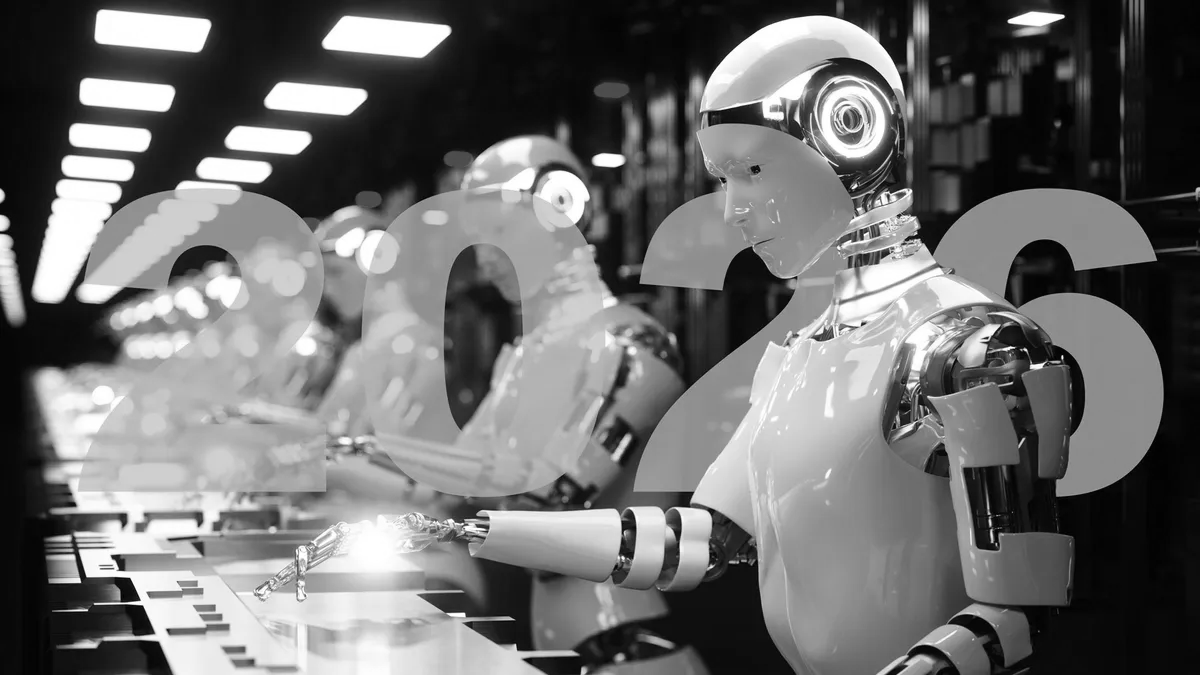
2026: The Year Robotics Got Real (And Why That’s a Good Thing)

The recent TechRadar analysis on the state of robotics in 2026 delivers a much-needed reality check for anyone expecting a Terminator-style future this year. The article expertly peels back the curtain on the current generation of high-profile humanoid robots, suggesting that much of their viral capability is, in fact, heavily reliant on human teleoperation—a fiction that sets wildly unrealistic consumer expectations. This is the core of Moravec’s Paradox in action: a robot can perform a spectacular backflip, yet struggle with the dexterity of tying a simple knot.

From the way it looks, 2026 will not be the year of the $20,000 consumer humanoid. Instead, the real, pragmatic revolution is unfolding in specialized applications. The focus is shifting to safer, more effective wheeled robots in manufacturing, and a new wave of AI-energized “mini bots” designed for specific tasks. This pivot from sci-fi spectacle to industrial utility, coupled with new safety standards allowing robots to work alongside humans, signals a healthier, more sustainable path for the robotics sector. The coming year is less about the rise of a new species and more about the quiet, crucial integration of intelligent machines into our existing workflows.

READ ARTICLE…